Temptation

Do any of you have recurring nightmares about taking an exam? Apparently its quite common. Whether it is a sense of being lost in the corridors and not finding the right classroom, or being handed a test paper on a subject you haven’t studied, or not being able to read the questions on the page?- there is a sense of anxiety and shame that we will fail. Tests can be true or false, multiple choice, an explanation of a concept, or the defence of an idea. They capture our understanding and choice at one point in time. And they mark us for the future. We have two test stories today from Scripture. Adam and Eve failed. Jesus passed. But life is full of testing. What about us? How will we respond?
Every day brings the opportunity to rise to the challenges and resist temptations, or to stumble and give in. Jesus knows this. It’s why he taught his disciples to pray, “lead us not into temptation, but deliver us from evil”. This sounds like it is God who is behind the impulse. In a way, this is true, for the Creator provides possibilities for choosing good or ill. God grew the tree of the knowledge of good and evil in the garden. The first man and woman desired the forbidden fruit. But it was their action that led to the consequences. In the alternate version of the Lord’s Prayer, we ask “save us from the time of trial and deliver us from evil.” There is a plea not to be put to the test, for we will fall short and be judged rightly for our failings under the Law of righteousness. We cannot be saved except by grace. And so we are asking to be guided in our choices: not by our own desires but by obedience to God’s will.
We don’t always choose rightly. When that happens, it is tempting to put the blame outward. “The devil made me do it.” Adam blamed Eve. Eve blamed the snake. People blame parents, addiction, advertising, society, the system. Everyone but ourselves. But does enticement come from without or from within? Even by the limits of our physical and emotional beings, we a choice to reach out for help. Our conscience acts on us from within. There is a realization that our choice caused us to act wrongly or foolishly, and we become aware of an unpleasant and objective truth about ourselves. We have the capacity for evil. We have hurt others. We have hurt ourselves. Maybe we feel shame and want to hide from the consequences. Most often, we try and justify our actions to ourselves. “I didn’t mean to do it.” “I didn’t think it would go this far.” “I couldn’t have seen what would happen.” “It really isn’t as bad as people are making out”. This is our inner snake.
In the story of the garden of Eden, the serpent is the fall guy. It is described as cunning or crafty. The Hebrew can also mean shrewd or subtle. Those qualities can be good or bad, depending on the context. In the episode with Adam and Eve, the serpent is the one who understands nuance and explores the grey areas of decisions. For the naive humans, it becomes more difficult to see right clearly. Their own desires outweigh trust that God will supply all their needs. Nowhere is the snake called the devil in this passage, but it is the character who expresses what the man and woman are struggling to grasp. They could have power to become like God! And so they fall to the temptation.
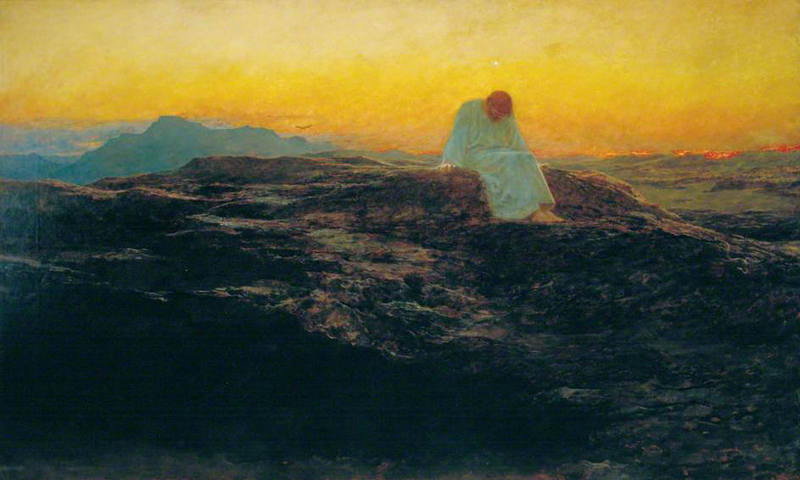
The serpent is more subtle than the accuser that meets Jesus in the wilderness in Matthew chapter 4. Again, the hand of God seems behind the scene: the Spirit leads Jesus into the wild and lonely place where he is confronted with his inner struggles. The face of temptation this time is in the one who is called “Diabolos”. The devil, as we translate the word, means an accuser or a slanderer. The Greek slang is “back-biter”, but the word literally means one who casts through, as in a lawyer who sets out to bring down or destroy an adversary in court. Jesus is assailed with all the doubts and anxieties of trying and failing to do God’s will. Instead, the devil offers the temptation of being able to succeed by aligning himself with the power of wealth, security, and worldly authority. Jesus sees through the devil’s cheat codes however, and the misuse of Holy Scripture. Where Adam and Eve fail, Jesus endures the testing and comes out of the self-examination with a purpose founded in obedience.
But this one test is not the final pass or fail. Jesus is repeatedly called to demonstrate and teach that love is not about desire for self but for God’s will to be done on earth as in heaven. Each encounter strengthens his resolve to reconcile the world to its Creator. Each moves him closer to suffering and the cross. In his full obedience, there is death and resurrection.
And we live between these two stories. We are part of a world that is full of temptations. That hasn’t gone away. When the voices whisper in our ears that we are not good enough, that we don’t have enough, that we aren’t big enough, that we won’t succeed- it is tempting to give up. Alternately, when we hear of a way forward that involves some rich or influential sponsor who will make things happen for us, the opposite temptation is that we can just hand over control and reap the benefits. Instead, it has been a series of slow steps and tests, with the ups and downs of our very human struggles to be faithful. But up to this point, hasn’t God provided the bread that we need, the protection of love, and the means to worship as a community? As individuals and as a church, the actions we take can bring us closer to where God is calling us. In obedience and trust that God will supply our needs for today and the future, we have choices to make. These are today reflected in our priorities and our parish leaders, our budget and our commitment to stewardship. May the generations of Christians that have been part of Holy Trinity Cathedral and the congregation here today be found worthy in the testing. Amen.

About
-
Location