To Be a Father

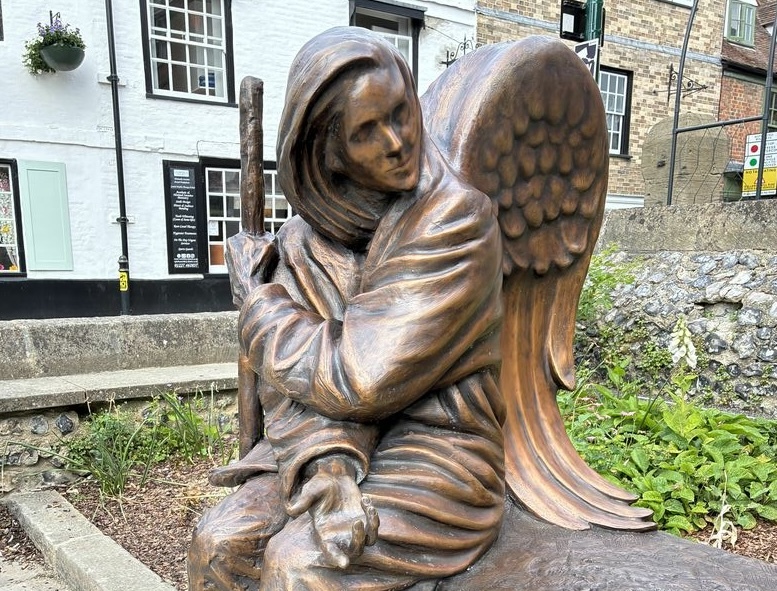
Genesis 18:1-15
Pentecost 3, June 14, 2026
Holy Trinity Cathedral
“To Be a Father”
Abraham really wanted to be a father. Not everyone longs to be a dad, at least, not in the biological sense. There are many different ways for men to nurture, mentor, teach, and support younger persons. They don’t all involve procreation. But Abraham, who had married the love of his life, Sarah, yearned for a son. It didn’t happen easily, or according to his timeline. And even though God promised he would be looked up to as the “father of many nations”, Abraham made a lot of mistakes along the way. He wasn’t perfect. No dad (or mom) is. That’s part of the territory that comes with being a father: learning to trust and love and forgive. As Abraham learned to trust that God is faithful, so he could live faithfully. God will meet us in this promise.
The back-story for this family from the Hebrew Scriptures is a little complicated. What family isn’t complicated? Abraham has been carrying faith and grief for a number of years. He had probably married his sweetheart when they were both young and living in the land of Ur amongst their wider family. But they were childless. A distant relative in Damascus was named as heir in the absence of children. When Abraham hears God’s call to leave his home and journey to Canaan, he takes his brother’s son Lot with them. A sort of insurance policy for when they are far from friends and family.
Along the way, Abraham has a series of adventures that test his faith in God’s plan. He nearly loses Sarah to the Pharoah in Egypt, who decides she would make a fine addition to his royal wife collection. After extricating themselves from that country, they arrive in Canaan. He leaves Lot to settle in the Jordan Valley to preserve harmony in the family (and then has to go back to rescue his nephew from some raiding warlords). Abraham goes on to settle by the oaks of Mamre. There he and Sarah decide to hedge their bets on God’s word. Abraham takes Sarah up on the offer of her slave Hagar, getting a boy-child by her. This is not adoption so much as asserting one’s right over property, but Abraham raises Ishmael as a surrogate son. When the youth is thirteen, his father and master has him circumcised along with the rest of the males in the household to show he is following God’s commands. Some of this feels like Abraham is forcing God’s hand, but he has waited until he is nearly one hundred years old, so you might forgive him for a little impatience.
Maybe it is this last act of Abraham’s in acknowledging Ishmael that brings a personal visit from the Lord. When is anyone really ready to be a father? Has Abraham learned yet from his experiences how to be wise and loving? He still needs reassurance that God is guiding his path. And so he gets these mysterious three visitors appearing at the door of his tent. Abraham greets them respectfully and offers hospitality graciously, bringing out the best of his provisions. And as he tends to their needs as travellers and guests, the Lord’s message is given anew: “I will surely return to you in due season and your wife shall have a son” (Genesis 18:10). Something changes in this moment. The three strangers speak with one voice, God is revealed, Abraham believes, and Sarah conceives. She is the one who laughs- with joy, with disbelief, with the absurdity of it all. The test, it seems, is to not just trust the promise, but to recognize the God who is acting through the words.
You would think that things would go smoothly from this point on. A happy birth, a happy childhood, and a loving father who helps Isaac grow to his full potential. Sadly, Abraham still is going to second-guess God’s plan and make things more complicated. He conceives that Ishmael is going to be a threat to his baby boy, so he banishes the teen and his mother to the wilderness, where God has to step in to save them. And then we have a terrible text coming where Abraham receives instruction to offer Isaac as a human sacrifice. Thank God, this is not the reading on Fathers’ Day! Leaving aside the questions of whether this was really what God was intending as a test and how this story was preserved, it does show that Abraham, like all fathers, struggles with the difficult decisions before him. Sometimes he chooses well, and sometimes he chooses wrongly. He is definitely not the world’s greatest dad. And yet, as he tries to understand and follow God’s call, we learn two things.
First, none of us are perfect. God doesn’t wait for us to be perfect before we are called upon to step into roles of responsibility. It is scary to know that our mistakes will affect and often hurt others. It takes courage to stay in relationships and participate in healing and forgiving and letting go of what has been said and done. There is a faithfulness that remembers that for better or worse, for richer or poorer, in sickness and in health, we are bound not just to our partner but to our children and our households. Even when marriage bonds break down, and our status to former partners change, that doesn’t make a man less of a father. When new relationships form, it is a steep learning curve to find ways to continue to be a dad, or to be in a fatherly role with those who are coming into your sphere while respecting who else is in their lives. Families, like Abraham’s, are complicated, and we need help to negotiate the challenges.
Thankfully, God is faithful. All through the saga of the forefather of our faith, God remembers the promises made to his people and encourages them to trust. No matter how briefly someone has had the gift of being a father, or how long it takes to take on that role, God is with us. When we wrestle with decisions and puzzle over what voices to trust in our heads, there is one God and Father of us all that maintains a loving presence in our lives. The One God who comes to us as Father, Son, and Holy Spirit shows us how to act in mercy and compassion, how to be steadfast in faith and charitable in our doings. And when we stumble and fall, God does not abandon us. Sometimes a holy message will come to us through strangers, and sometimes through the still small voice of conscience. If we are looking, we will find God’s presence.
Today there is room for us to laugh and cry at the comedy and tragedy of human life. We give thanks for fathers whose children have died and for those who did not receive the child they hoped for. We give thanks for those who are estranged from their children, and those who have made efforts to reconcile. We give thanks for fathers whose children live far away or who lead busy lives. We give thanks for fathers who are making restitution for past mistakes, as well as those who delight in healthy family relationships. And we celebrate all men who by their guidance and care have been father-figures for good in the lives of others. It isn’t easy to be a dad, as Abraham found out. Thank God we have a heavenly Father, who loves us and can teach us to love better. Amen.

About
-
Location