From the Outside In

John 20:19-31 2026
Easter 2, April 12, 2026
Holy Trinity Cathedral
“From the Outside In”
Heard of escape rooms? That’s when a group of people are locked into a chamber and have to work together to accomplish and goal: usually to find the key to get out. There are a series of puzzles or questions that have to be answered within a certain period of time. Everyone explores the surroundings, discovers clues, compares ideas, and comes up with solutions. No expert knowledge is needed; the room itself provides enough information to get to the point. What these escape rooms do test is thinking outside the box. Participants cannot rely on prior assumptions or eliminate options based on one individual’s observation. Only those who are willing to engage cooperatively will see the unlocking of the door for all.
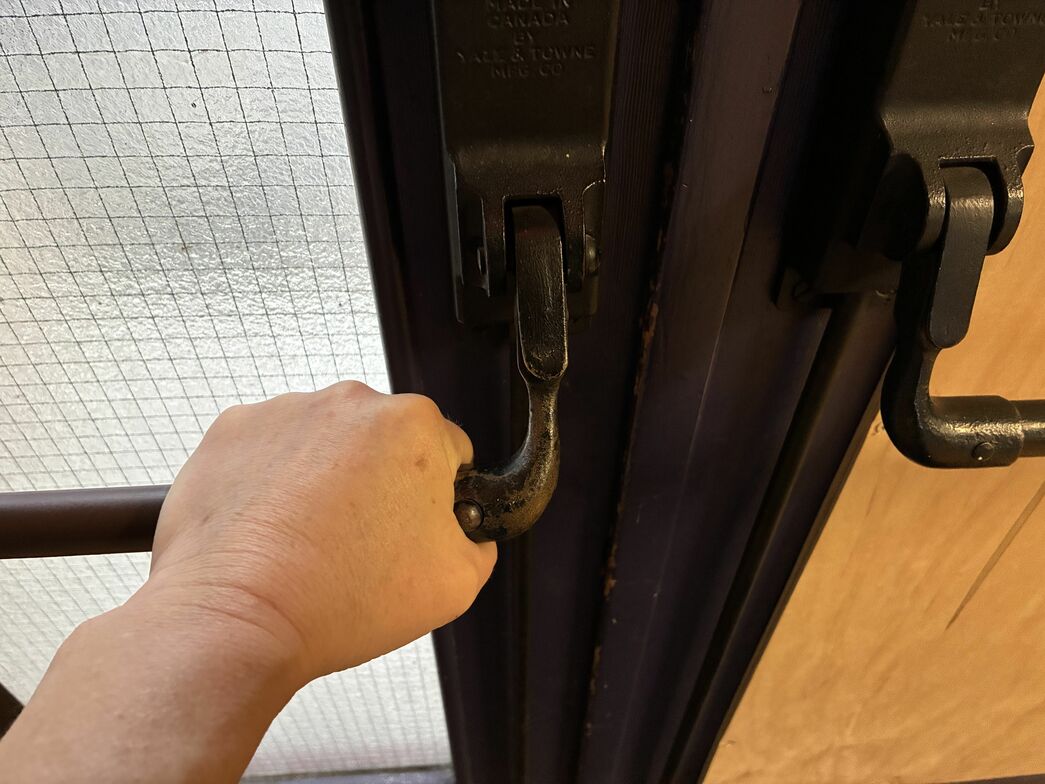
The disciples who lock themselves in a closed room don’t seem to have got the point of the resurrection. They have barricaded themselves away in fear. This happened even after news has been brought to them that the grave is empty, and their Lord has been seen alive by Mary Magdalene. Rather than rejoicing and going out to look for Jesus, they hide. John’s gospel says that they hide for fear of the Jews. Now, the twelve disciples were Jewish themselves, so are they fearful of the temple and ruling authorities, who so recently condemned Jesus and his followers? Probably. But maybe they are also afraid of the judgment of other Jewish disciples, and distrustful of each other. The women don’t seem to be with them. Neither is Thomas. Each of them is trapped in fear- processing the trauma of the crucifixion and death of Jesus as best they can. What is common is that the ones on the inside are hiding from what might be waiting for them outside. And they aren’t doing much to try and break out.
So the risen Christ has to come in. Through the barriers that have been set up, he brings the clues to the puzzle of resurrection. He stands in their midst and shows the disciples his wounded hands and feet and side. The scars he bears show the pain he has endured for love of them. In his presence they find the peace and forgiveness they need to get on with the job at hand. Jesus breathes the Holy Spirit upon them and promises them that as they are able to forgive others, they will know forgiveness. Only as they can forgive themselves and others will they be able to extend God’s forgiveness to the world. These are the pieces of the puzzle they are given to lead them to faith.
But even this inspiration doesn’t lead to an instant solution. Yes, they are able to share the good news that they have seen the Lord with the absent disciple, Thomas. (We don’t know why Thomas wasn’t with them the first time. Maybe he was even more isolated in his grief. Or maybe he was the one brave enough to go buy groceries or seek out other followers of Jesus). The post-resurrection appearance doesn’t bring about an out-pouring of gospel proclamation, however. In fact, the next week finds them still huddled in their bolt-hole.
This time, Thomas is with them. He only wants what the others have already received: the sight of the Lord with the evidence that he has suffered, died, and risen. He has come from the outside in to his companions, but he obviously doesn’t trust their testimony completely. Thomas wants to examine the clues and come to his own conclusions. When Jesus again appears among the twelve, Thomas is invited to reach out and touch him. He sees and hears, and believes. And his faith takes him to make that intuitive leap that unlocks the room for everyone. “My Lord, and My God!” The disciple that recognizes that the risen Christ is fully divine holds the key to faith.
In this story and in the other pages of Scripture are the clues that all who would know Jesus Christ need. The writer of John’s gospel ends by saying, “Now, Jesus did many other signs in the presence of his disciples which are not written in this book. But these are written so that you may come to believe that Jesus is the Messiah, the Son of God, and that through believing you may have life in his name” (John 20:30-31). We don’t have to stay trapped in fear. The key to the door of life is before us.
At the bottom of the garden at my elderly cousin’s home in Salisbury, England, there is a bomb shelter. It was built at the beginning of the Second World War. Cinder blocks joined with mortar form a small room half underground, with a sturdy metal door. When the warnings came that enemy planes had been sighted, the family grabbed their blankets and huddled in the dark amongst the stored root vegetables. I visited long after that war, peering into the dark interior as the structure was slowly being taken over by the surrounding greenery. It had not been kept up because after that terrible time who would think it would ever be needed again? Yet in these times of nuclear threats, wildfires, tornadoes, and ongoing conflicts, the idea of a safe room where we can hide is appealing to many. Even the strongest steel and the deepest bunker won’t ward off every harm, however. There has to be a different way to have the courage to face what each day may bring. What if we were to let Christ come into our dark and fearful places? What if we were to trust him to breath peace and forgiveness over us? Could we then find the courage to believe that people of faith can help God change the world? Amen.

About
-
Location