In Your Dreams

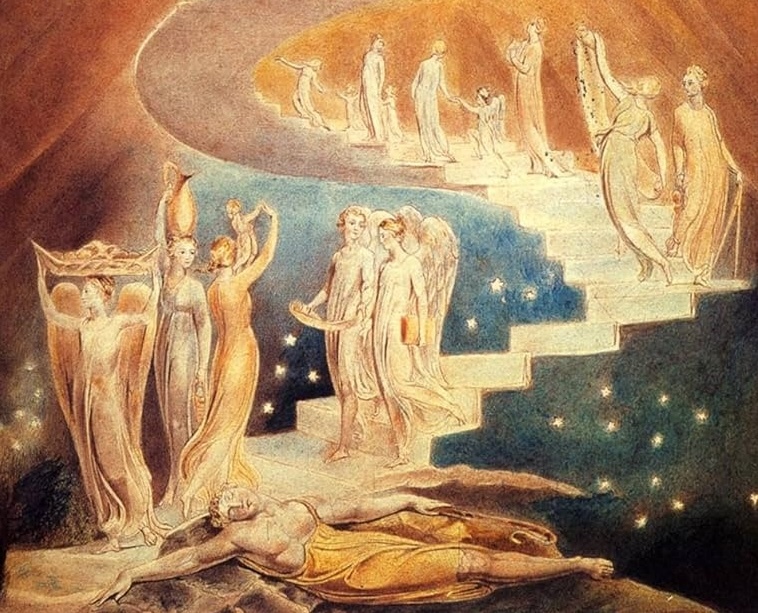
Genesis 28:10-19a
Pentecost 8, July 19, 2026
Holy Trinity Cathedral
“In Your Dreams”
Is there anyone who hasn't seen the original film of “the Wizard of Oz”? There is a moment when the farmhouse lands in Munchkinland and the screen shifts from black and white to technicolour. It was astounding for those first audiences viewing in 1939 and it still makes an impact today. Everything is suddenly more vivid. Spoiler alert: we aren’t told until the end of the story that this may a dream of Dorothy’s. The characters she meets are symbolic; they teach her important lessons about herself. Everyone dreams. Some actually grasp upon waking that something important has been shown to them. Perhaps something holy.
My dad swears he only dreams in black and white because he started before colour television was invented. But most of us can remember a colourful detail or two. In French, if you tell someone “tu reve en couleurs” it’s a bit of an insult. The implication is that you are making something up or have unrealistic expectations. If Jacob had told others about what happened to him at Bethel, they may have scoffed. And perhaps he wasn’t too sure himself. His dream of a ladder reaching from earth to heaven, with angels going up and down leads him into a personal encounter with God. When he wakes up, he is afraid. Something inside him has changed.
Now Jacob is Isaac’s son and Abraham’s grandson, but he is not a poster child of the faith. Already he has tricked his older twin out of his birthright and his father’s final blessing. His name means “grabber” and so far he has been trying to grab his destiny with his own hands. Now he is being sent back to his kinsfolk in Haran to get a wife before his urges land him in bed with a Canaanite woman. Off he treks into the wilderness on his own. He finds himself in a lonely and deserted place for the night. With only a rock to shelter him, he manages to fall asleep.
Sleep is such a vulnerable state for a human. Not only are we defenceless against the elements and outside forces, we are also open to inner changes as well. Especially in what is called REM sleep. Rapid eye movements signal the body’s shift into dreaming. Muscle tone is at its lowest, and electrical bursts in the brain signal something is happening. Are we processing the day’s experiences, making sense of perceptions, or working through a conflict or anxiety? Symbolic images and storylines occur to us. When we wake, we sometimes feel like we have been visited by a presence. And as the remnants of sleep cling, there is the possibility that a new idea, a revelation, an encouragement or comfort has been given to us. Our bed can be holy ground.
Jacob realizes that what he has experienced is out of the ordinary. Does he dream he is in the sky looking down, or on the ground beside himself looking up at the connection between heaven and earth? He watches the messengers of God but does not attempt to climb himself. Afraid? Ashamed? Not ready? Sometimes what we don’t or cannot do in dreams tells us something important. He sees the place as the house of God and the gate of heaven, but he does not enter. Yet.
The Lord appears beside him and offers the promise of land to Jacob. The blessing is offspring that will spread to inhabit the land, and protection wherever Jacob and his descendants go. God hasn’t given up on this third generation of Abraham’s family. That’s a handsome covenant being extended. But we don’t hear Jacob agreeing to it in this passage of Scripture. When he does respond, it is conditional. “If God will be with me, then the Lord shall be my God” (Genesis 28:20). He wants to know that this is more than just a dream. God has created a way between heaven and earth through this very imperfect individual. However, it’s only the beginning of Jacob’s struggle with identity and faith.
The words that Jacob speaks when he wakes are peculiar. “God was in this place and I, I did not know” (Genesis 28:16). In the original language, the “I” is repeated. Many rabbis and scholars have wondered about this and given explanations about what might be going inside as he struggles to understand. Dreams can point the way to greater self-awareness. No longer is Jacob just trying to earn a living and get a family. He has questions. He is searching for meaning. The experience has stripped away some of his assurance and certainty about what he wants in life. Who can he have a relationship with; who can he trust? His father has died. He is at odds with his brother. Even though he hasn’t paid much attention (seemingly) to the family stories about how God is guiding them to a new home, he has a new awareness of possibilities. What if he were to not be quite so selfish and serve only himself? Now that he has met the Holy in his dreams, can he trust God in his waking life?
Dreams can bring messages. Like those angels travelling up and down the stairs from earth to heaven, there are strange and wonderful connections between the science of our bodies and our spiritual selves. Occasionally one will come that signals a deep truth, and points the way forward even when we do not know with our conscious thoughts. All through our scriptures and the history of the Church we have stories of ordinary people who have been visited by the Holy through their dreams. Is it so impossible to believe that God can reach out to us in this way, to show us possibilities beyond what we can reason out? We too may discover that God is with us in that place which shows itself to be the house of God. Amen.

About
-
Location