More Than Taxes

Matthew 22:15-22
Pentecost 22, October 18, 2026
Holy Trinity Cathedral
“More than Taxes”
Monty Python’s “Life of Brian” is set at the time of Christ and centres around a hapless man whose life gets tangled up in that of the Messiah. One day he encounters a group of Judean zealots who are plotting an uprising against the Roman occupiers. To justify their efforts, they complain about how badly off they are under the Empire. After all, what good have the Romans done? One by one, they sheepishly offer some of the benefits.
'All right, but apart from the sanitation, the medicine, education, wine, public order, irrigation, roads, a fresh water system, and public health, what have the Romans ever done for us?'
It’s a ridiculous scenario, but there is a reminder that although taxes are universally hated, their purpose is for the common good. Where we as Christians stand in relation to what is owed to others and to God is the challenge of today’s gospel.
Our word tax comes from the Latin verb taxaré, which can be translated as to evaluate, estimate, assess, or handle. From ancient times, rulers and authorities imposed mandatory contributions from those under them. Whether citizens, immigrants, or foreigners, being part of a society meant assessments on income and goods. For those who tried to avoid taxes, there were steep penalties, ranging from heavy fines to execution. And in Israel, tax collectors were even more hated because they worked on commission for the evil empire. On top of the portion they had to send on to Rome, they also had to squeeze out something for themselves. Every Jew resented that they were paying taxes to an occupying force. But it would take a very brave and very foolhardy person to speak out against the practice.
Of course, the religious authorities just had to try and trap Jesus in their question. “Is it lawful to pay taxes to the emperor or not?” If he says ‘Yes’ then he offends Jews. If he says ‘No’ he is committing treason against Rome. Jesus, however, gets to the heart of the matter of what is owed to whom. The people of Israel live in the midst of a society that grows and manufactures and trades and works with many different peoples. Jews are distinct but not separate from the wider world. If they are engaged with Romans in any commerce or activity, they are probably being paid in the coins of the empire. The measures of gold and silver were stamped with the face of the emperor. That’s not so different from today. Heads of state appear on coins and bills around the world. But at the time of this encounter, Tiberius was on the throne, and the coins bore the words “Tiberius Caesar, son of the divine Augustus, Augustus”. The mythos surrounding the Roman emperor was that he claimed to be divine. This is blasphemy and idolatry for the Jewish people. To handle the coins of the empire was to admit benefitting from the work of the empire. Give some of them back where they came from. Or in the traditional terms, “render unto Caesar that which is Caesar’s”.
But the bigger question is: “What then are the things that are God’s?” If the image on the coin reflects Caesar, Jesus is asking his interrogators what reflects the image of God. If they know their Scriptures at all, they will remember the story of creation. God creates humankind in God’s image, male and female God creates them. So every person bears the image of God just as a shabby little coin bears the image of Caesar. Which is more important! As a community, people of faith work to love God and love neighbour. Some of those works can be done through civil authorities for the common good. But it is the whole of our lives that we are to offer to God. We don’t have a choice in taxes: they are assessed by authorities and they have to be paid if we want to get on with our lives. We do have a choice in how and what we contribute to the kingdom.
In the Hebrew Scriptures there is the idea of a tithe. This voluntary offering was seen as 10% of one’s income and harvest, given off the top. For Jews, it went to the Temple. The religious leaders were trying to teach and help those who were not assisted by other measures. Widows and orphans, the sick and the destitute, the slave and the foreigner. As Christian communities evolved, they carried on the concept of proportional giving to best that each person could achieve. This is not instead of paying taxes to the civil authorities, but in addition. Then as now there are times when the Church can work with civil authorities for the common good and times when people of faith have to lead by example.
Judeo-Christian values have informed how our modern society operates here in Canada. Many of the taxes that we are assessed for do go towards public works. Different levels of government are responsible for different aspects of communal life. Here is where your taxes go:
- Municipal
- Public safety such as fire and police services
- Parks and recreational services
- Libraries and civic cultural events
- Utilities and infrastructure
- Sanitation
- Provincial
- Healthcare
- Education
- Transportation
- Social and community services
- Justice and public safety
- Federal
- National defence
- Federal justice
- Employment insurance, retirement income, and social benefits
- Border services and RCMP
- Science and research
- Indigenous services and reconciliation
- immigration
- Public communications and CBC
- Debt service
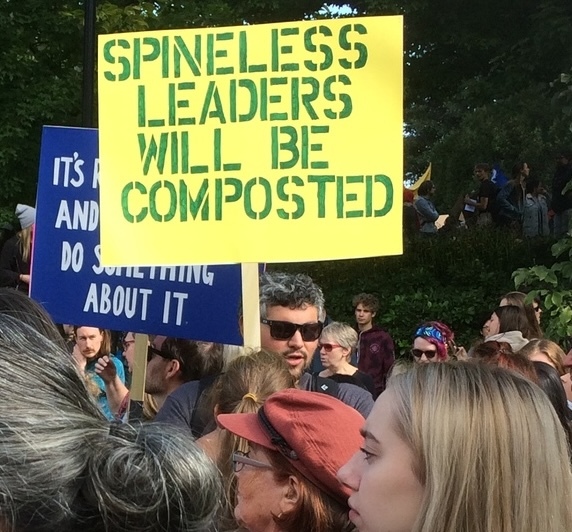
When we elect public officials, we are expecting them to execute their duties with responsibility for all and not for their own benefit. We are also expecting them to listen to us as constituents about what the priorities are for assisting us to be a peaceful and prosperous community. But we have to do more than expect.
We as people of faith have a special role in the midst of the wider society. We bear the image of God and we are to recognize it in others. We are to be the conscience of those who demand our taxes. Hold them to account. And we are to recognize that there are gifts that God has entrusted to us so we can put them to work for the kingdom. What has God done for us? Everything that we are and everything that we have belongs to God. That is our starting point. When we consider all the benefits we have received so far, does this give us the courage to risk a next step?
If we were to add up all that we owe, it might overwhelm us and freeze us in our tracks. How can we pay back all that has been done for us? Perhaps the only way forward is the assurance that we bear the image of Christ. We are God’s treasure. That coin is more precious than any the world can produce. Amen.

About
-
Location